
How Can Property Owners Decide Between Roof Coating vs Replacement?
A roof coating may be the right solution when the existing roof is still structurally sound and can be restored. A roof replacement is typically necessary when moisture intrusion, insulation failure, or structural deterioration are widespread. The only way to know which option makes sense for your building is through a professional roof assessment.
Stop Replacing Roofs That Can Still Be Restored
For commercial property owners, a roof replacement is often one of the largest capital expenses a building will face. The challenge is that many roofs are replaced before anyone fully understands whether restoration is still a viable option.
At Guardian Roof Coating, we believe every roofing project should start with diagnostics, not assumptions.
We’ve evaluated roofs that were recommended for replacement only to discover they still had years of service life remaining through repairs, restoration, and coating systems. We’ve also inspected roofs where replacement was clearly the right long-term decision.
The goal is not to sell a coating or a replacement. The goal is to determine which solution delivers the best outcome for the building.
What’s the Difference Between a Roof Coating and a Roof Replacement?
A roof coating is a liquid-applied system installed over an existing commercial roof, while a roof replacement is a major project that involves a full tear-off and rebuild of the roofing system.
When applied to a suitable roofing system, roof coatings create a seamless protective membrane that helps resist water intrusion, weather exposure, and ongoing deterioration. In many cases, roof coatings are incorporated into a broader flat roof restoration strategy designed to extend the service life of an existing roof.
A roof replacement involves removing part or all of the existing roofing assembly and installing a new system. Depending on the roof’s condition, replacement may include new insulation, decking repairs, and a completely new roofing membrane.
The primary difference is simple:
- Restoration preserves and extends the life of an existing roof.
- Replacement creates an entirely new roofing system.
The challenge is determining which path makes the most sense for your specific roof.
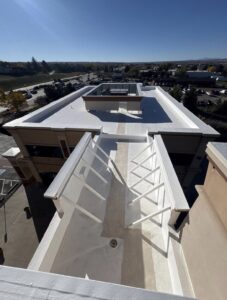
Why a Roof Assessment Should Always Come First
One of the biggest mistakes property owners make is assuming age alone determines whether a roof should be replaced.
It doesn’t.
Two roofs installed in the same year can have completely different conditions based on maintenance history, drainage performance, weather exposure, installation quality, and repair history.
A professional roof assessment evaluates:
- Membrane condition
- Flashing performance
- Seam integrity
- Drainage systems
- Existing repairs
- Signs of water intrusion
- Structural concerns
- Remaining service life
These findings should be documented within a roof condition report that highlights observed deficiencies, shares photographs, offers recommendations, and clearly outlines potential next steps.
This assessment process can often identify opportunities for roof restoration. Many roofs that appear to be nearing the end of their useful life may still have years of service remaining after repairs are made or coating systems are applied.
Conversely, a thorough assessment may reveal conditions that make restoration impractical. In those situations, replacement may provide greater long-term value.
Without an inspection, property owners may make expensive mistakes due to incomplete information, such as completing repairs on a deteriorated roof or replacing a roof that could be restored at a significantly lower cost.
How Colorado Weather Impacts the Decision
Colorado roofs face unique challenges that can accelerate deterioration if problems are not identified early.
Commercial roofs throughout Denver and the Front Range regularly endure:
- Intense UV exposure
- Hail storms
- Freeze-thaw cycles
- Snow accumulation
- Ponding water from snow melt
- Rapid temperature swings
These conditions can cause membranes to shrink, seams to separate, flashings to fail, and coatings to deteriorate over time.
The good news is that weather-related wear does not automatically mean a roof requires replacement.
Many roofs experiencing surface-level aging from Colorado’s climate remain strong candidates for restoration when addressed before major failures develop.
When Does a Roof Coating Make Sense?
In many cases, restoration is most effective when the roof is showing signs of aging but has not experienced widespread failure.
Commercial roof coatings will not work with every roof or roofing system, but they can provide significant value when the underlying roof remains a good candidate for restoration.
Situations where roof coatings often make sense include:
- The roof structure remains sound
- Insulation is largely dry and functional
- Membrane is weathered but intact
- Leaks are limited and identifiable
- Moisture damage is minimal and largely surface-level
- Drainage issues can be corrected
- Existing roofing materials are suitable for coating systems
When Is a Roof Replacement Needed?
Although restoration methods can be highly effective, there are situations where replacement becomes the most responsible recommendation. The goal should never be to force a roof coating onto a roof that has already surpassed the point where restoration can deliver meaningful value.
- A roof replacement is often necessary when:
- The roof has widespread moisture intrusion
- Insulation is heavily saturated
- Structural components have deteriorated
- Multiple parts of the structure are failing
- The membrane has extensive damage
- Previous repairs have become ineffective across large areas
- The roof has reached the end of its practical service life
In these situations, restoration may only provide a temporary improvement while larger issues continue to develop beneath the surface. A replacement project often involves greater upfront cost, but it can provide a fresh starting point and a longer planning horizon for the property owner.
This is why objective roof assessments matter so much. The goal is not to determine whether coatings are better than replacement. The goal is to determine which solution delivers the best outcome for the specific building, roof, and property owner.
How Is a Roof Coating Project Different from a Roof Replacement?
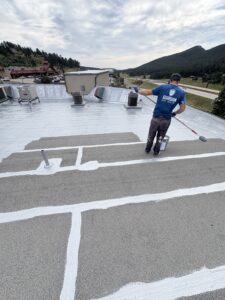
Roof coating and replacement projects differ in many ways, including:
Initial Cost
In many situations, roof coatings and restoration projects cost substantially less than replacement because the existing roofing system remains largely in place.
Replacement involves additional labor, material removal, disposal costs, and installation of a new roofing system, all of which increase project expenses.
Project Timeline
A skilled roofer can complete a roof restoration project much more quickly than a full replacement.
The shorter timeline can be especially valuable for occupied commercial buildings where minimizing disruptions is a priority.
Building Operations
Many property owners worry about how roofing work will affect tenants, employees, customers, and daily operations.
Because restoration generally avoids large-scale tear-off activities, projects can often proceed with less disruption to building occupants.
Expected Lifespan
A roof replacement provides a completely new roofing system with its own expected service life, while a restoration project extends the life of an existing roof.
Typically, this means that the expected lifespan of a roof replacement will be longer, but depending on the condition of the roof and the coating system selected, a roof coating can add nearly as much service life as a full replacement.
Future Maintenance
Even newly installed roofing systems benefit from routine inspections and preventative commercial roof maintenance. Restoration projects should also be monitored through regular inspections to maximize performance and longevity.
Understanding Total Cost of Ownership
One of the most common mistakes in commercial roofing is evaluating projects based solely on initial price.
A lower project cost does not inherently mean better value. Likewise, a higher project cost does not necessarily make a roof replacement the wrong choice.
To help understand the true cost of a roofing project, building owners and property managers should consider the Total Cost of Ownership. Total Cost of Ownership, or TCO, considers all of the expenses associated with a roofing system over its entire lifespan rather than focusing exclusively on the upfront project cost.
Factors include:
- Initial construction costs
- Future maintenance requirements
- Anticipated repair expenses
- Warranty coverage
- Expected service life
- Operational disruptions
- Future replacement timing
Instead of asking, “Which option is cheaper today?” the better question is, “Which option creates the most value over the life of the
building?”
For example, a roof coating may offer exceptional value if the roof can safely gain another decade or more of service life while avoiding a major capital expenditure. On the other hand, if a roof has deteriorated extensively, a roof replacement may provide better long-term cost efficiency despite the larger upfront investment.
Property managers are often tasked with balancing immediate budget realities against long-term ownership goals. Looking at Total Cost of Ownership allows decision-makers to evaluate roofing projects from a broader financial perspective.
Commercial Roof Restoration Backed by GAF-Certified Expertise
Guardian Roof Coating is recognized as a GAF GoldElite™ Commercial Contractor and a GAF CoatingsPro™+ Liquid Applied Roofing Contractor, certifications awarded to contractors who meet GAF’s standards for commercial roofing and liquid-applied restoration systems.
Our team specializes in evaluating aging flat roofs and identifying when restoration, coatings, or targeted repairs can extend service life before replacement becomes necessary.
Roof Coating vs Replacement FAQs
How long does a commercial roof coating last?
A commercial roof coating may last anywhere from 5 to 20 years. The exact lifespan depends on the coating system, roof condition, installation quality, and maintenance practices.
Can every commercial roof be restored with a coating?
No. Some roofs are excellent candidates for restoration, while others have conditions that require replacement. A professional roof assessment is necessary to determine whether restoration is viable.
Is roof restoration less expensive than replacement?
In most cases, roof restoration costs significantly less than full replacement because it avoids extensive tear-off and reconstruction. When the cost of a roof restoration approaches that of a replacement, however, the latter is typically recommended.
How do I know whether my roof can be restored?
A professional roof assessment is the best way to determine whether a commercial roof can be restored with a coating. These evaluations will assess the roof’s condition and weigh findings against your needs and budget.
Make the Right Roofing Investment for Long-Term Performance
Choosing between a roof coating and a roof replacement is not simply a matter of comparing project costs. The right decision depends on the condition of the roof, the goals of the property owner, and the long-term value each option provides. Many commercial roofs can continue performing effectively through restoration and roof coating systems that extend service life while reducing costs and disruption. Other roofs, however, have reached a point where replacement is simply the more practical long-term solution.
At Guardian Roof Coating, our team provides honest, transparent roof assessments to help Denver building owners, property managers, and even other roofing companies determine whether a roof coating is a viable option for flat and low-slope roofs. We pride ourselves on our expertise and integrity and will always make recommendations tailored to your specific roofing situation.
If you’re looking to get better performance from your roof, we’re standing by to provide a full assessment and roof condition report. Contact us today to book your inspection.