
Why Should Property Owners Schedule a Commercial Roof Inspection?
Commercial roof inspections help building owners and property managers identify developing roofing problems before they become expensive repairs. Most commercial roofs should be professionally inspected at least once per year, after major storms, before property transactions, and whenever signs of deterioration are present.
The Best Roofing Decisions Start With Accurate Information
Commercial roofing problems rarely appear overnight.
Leaks, membrane deterioration, drainage issues, and flashing failures tend to develop gradually, making routine commercial roof inspections one of the most important investments a building owner or property manager can make.
At Guardian Roof Coating, our commercial roof inspection services provide building owners in Denver and across the Front Range with a clear picture of their roof’s condition. We identify developing problems, help determine whether repairs, restoration, maintenance, or replacement may be needed, and create documentation to support budgeting, warranty compliance, and long-term asset management.
Here’s what building owners and property managers should know about commercial roof inspections, including when to schedule an inspection, a checklist of what should be included in a roof condition report, and how to use inspections to protect your roofing investment.
What Is a Commercial Roof Inspection?
A commercial roof inspection is a comprehensive evaluation of an often flat or low-slope roofing system that assesses overall condition and identifies roofing issues before they compound into significant problems.
Unlike a quick visual walkthrough, a professional inspection should be a systematic review of the roof membrane or surface, seams, flashing, drainage systems, penetrations, previous repairs, and other critical components. Findings should be documented in a roof condition report that outlines observations, photographs, recommendations, and potential next steps.
At Guardian Roof Coating, we believe every roofing project should begin with diagnostics, not assumptions.
When Should Property Managers and Building Owners Schedule a Roof Inspection?
Many roofing issues are easier and less expensive to address when they are identified early. By the time a leak appears inside a building, the underlying problem has likely been developing for months or even years.
Commercial roof inspections should generally be scheduled:
- At least once per year, typically in the spring and/or fall
- After major hail, wind, or severe weather events
- Before purchasing or selling a commercial property
- Before a roofing warranty expires
- When developing annual maintenance budgets
- Before completing work such as a significant repair, restoration, or replacement
While hail and damaging storms are frequent here in Colorado, property managers should establish a regular schedule for roof assessments rather than relying solely on reactive inspections. Consistent inspections create a documented history of roof performance and help identify trends before they become major expenses.
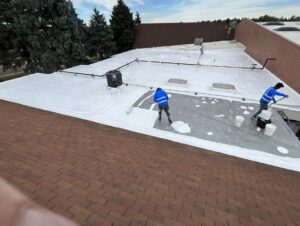
How Colorado Weather Impacts Commercial Roofs
Commercial roofs throughout Colorado face conditions that can accelerate deterioration over time.
These include:
- Hail storms
- Intense UV exposure
- Freeze-thaw cycles
- Heavy snow accumulation
- Ponding water from snow melt
- Rapid temperature swings
Many roofing systems develop hidden issues long before visible leaks appear.
Routine inspections help identify weather-related damage early and provide documentation that can support future repair planning and warranty requirements.
Signs Your Commercial Roof Needs an Inspection
Whether your area has recently experienced a major weather event or not, there are several warning signs that should prompt a building owner or property manager to schedule a roof inspection:
Active Leaks
Water intrusion is one of the most obvious indicators that a roofing system requires professional evaluation. Even minor leaks can point to larger issues hidden within the roof assembly.
Ponding Water
Standing water that remains on the roof for extended periods can accelerate deterioration and increase the likelihood of leaks.
Membrane Damage
Cracks, punctures, blisters, shrinkage, or excessive wear on the roofing membrane should be inspected before they worsen.
Flashing Deterioration
Flashing protects transitions, penetrations, and roof edges. When flashing begins to fail, water often finds its way into vulnerable areas.
Frequent Repair Calls
If the same area of a roof requires repeated repairs, there may be an underlying issue that has not been fully diagnosed.
Rising Energy Costs
Unexpected increases in heating or cooling expenses can sometimes indicate roofing issues affecting insulation performance.
Commercial Roof Inspection Checklist: What Should Be Included?
A quality inspection evaluates the entire roofing system rather than focusing solely on visible leaks. While every property is different, here is a full checklist of what a professional commercial roof inspection should include:
Roof Membrane/Surface Condition
The exterior roofing layer is the primary waterproof barrier for many commercial roofing systems. Inspectors evaluate:
- Cracks
- Punctures
- Tears
- Blisters
- Surface wear
- UV deterioration
- Signs of aging
Seams and Flashings
Many roofing failures occur where materials join together. Inspectors look for:
- Open seams
- Separation
- Failed sealants
- Loose flashing
- Areas vulnerable to water intrusion
Roof Penetrations
Every penetration creates a potential entry point for water. Common areas evaluated include:
- HVAC equipment
- Vents
- Pipes
- Curbs
- Utility penetrations
Drainage Systems
Proper drainage is essential to long-term roof performance. Inspections typically include:
- Roof drains
- Scuppers
- Gutters
- Downspouts
- Ponding water locations
Previous Repairs
Past repair work can reveal recurring issues or areas requiring additional attention. Inspectors assess both the condition and effectiveness of previous repairs, ensuring best practices were followed.
Interior Assessment
Roofing issues can manifest inside a building as well as on the roof. Commercial roofers will typically perform an inspection of the building interior, looking for signs of moisture intrusion, assessing structural issues, and evaluating ventilation.
What Should Be Included in a Roof Condition Report?
A roof condition report is one of the most valuable outcomes of a professional inspection. It transforms observations from the field into actionable information that property owners can use to budget and to make decisions about their property.
A comprehensive roof condition report should include:
- An overview of the roof’s current condition
- Photographs documenting findings
- Locations of identified issues
- Descriptions of observed deficiencies
- Repair recommendations
- Roof maintenance recommendations
- Estimated urgency of identified issues
- Approximate remaining timeline for the roof’s lifespan
Property managers and building owners should come away understanding not only what problems exist, but also what options are available to address them. Detailed documentation also helps establish maintenance records and maintain warranties while supporting future planning efforts.
What Should Property Owners Document Between Inspections?
Professional inspections are important, but property managers also play a valuable role in monitoring roof performance throughout the year. Keeping records of roofing-related events can help roofers identify patterns and diagnose issues more efficiently.
Useful information to document includes:
- Dates and locations of leaks
- Tenant reports involving moisture intrusion
- Major weather events
- Standing water observations
- Roof access activity
- Previous repair history
- Photographs of developing concerns
This information creates a more complete picture of roof performance over time, can improve the effectiveness of future inspections and helps identify potential causes of roofing issues, whether it’s one of our many hail storms here in Denver or errors made during an HVAC installation.
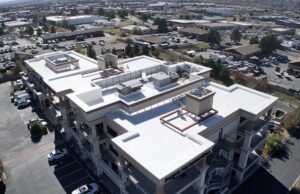
What Are the Benefits of Commercial Roof Inspections?
Many building owners schedule inspections only after a problem becomes obvious. However, routine inspections provide significant long-term advantages.
Earlier Problem Detection
Small issues are generally easier and less expensive to address through commercial roof repairs than widespread roof failures.
Better Budget Planning
Inspections help owners anticipate future roofing expenses and enable them to plan accordingly.
Extended Roof Lifespan
Regular evaluations and maintenance can significantly improve the service life of a commercial roofing system.
Reduced Business Disruption
Identifying issues early reduces the likelihood of unexpected leaks, emergency repairs, and operational interruptions associated with major roofing problems.
Improved Warranty Compliance
Many roofing warranties require periodic inspections and maintenance—and may be voided by negligence. Proper documentation can help support warranty claims when necessary.
More Informed Decision-Making
Owners gain a clearer understanding of their roof and can evaluate options with greater confidence.
Can a Roof Inspection Determine Whether Restoration Is Possible?
One of the most important functions of a commercial roof inspection is determining whether restoration may be a viable option.
Many building owners assume an aging roof automatically requires replacement. In reality, numerous commercial roofing systems can continue performing effectively when repairs or roof restoration solutions are applied at the right time.
An inspection helps evaluate factors such as:
- Overall material condition
- Moisture intrusion levels
- Structural integrity
- Existing roof system performance
- Remaining service life
In some situations, restoration can extend roof life while reducing project costs compared to a full replacement. In others, replacement may be the most practical long-term solution.
A thorough inspection provides the data needed to evaluate available options and determine the most appropriate path forward.
Why Property Owners Call Guardian Roof Coating Before Replacing a Roof
Many roofing contractors inspect roofs with the goal of determining what needs to be replaced.
We approach inspections differently.
The first question we ask is:
Can this roof still be restored?
As a GAF GoldElite™ Commercial Contractor and GAF CoatingsPro™+ Liquid Applied Roofing Contractor, Guardian Roof Coating specializes in evaluating aging flat roofs, identifying hidden failures, and determining whether restoration remains a viable option.
Our team is frequently called by building owners, property managers, and even other roofing contractors looking for answers before committing to a costly replacement project.
Not every roof should be coated.
Not every roof should be replaced.
The goal is to find the solution that delivers the best outcome for the building.
Commercial Roof Inspection FAQs
How often should a commercial roof be inspected?
Most commercial roofs should be professionally inspected at least once per year, as well as following severe weather events.
What is a roof condition report?
A roof condition report is a detailed document that summarizes inspection findings, photographs, identified issues, and recommendations for maintenance, repair, restoration, or replacement.
How long does a commercial roof inspection take?
Most inspections can be completed within a few hours. The timeline varies depending on roof size, complexity, accessibility, and the scope of documentation required.
Know Your Roof, Protect Your Property
A commercial roof is one of the most valuable and important components of any building. Regular inspections help property owners and managers protect that investment through better planning, earlier problem detection, and more informed decision-making.
Whether your goal is extending roof life or simply understanding the condition of your roof, our team at Guardian Roof Coating is standing by to provide the information you need to move forward with confidence. Our process is tailored to the needs of property managers in Denver and across the Front Range, and we follow a comprehensive checklist throughout every commercial roof inspection, delivering thorough, transparent information along with detailed recommendations for your roofing system.
Knowledge is the first step toward protecting your property over the long term. Reach out to our team today to book your inspection.